
Originally published in Radio Metal.com · June 2007
Dream Theater: Interview With James LaBrie
Tuesday, June 26, 2007 at 12:00 AM via Radio Metal
InterviewTranslatedJames LaBrie28 min read
Translated from the original language with Google Translate, so the wording may differ from what was actually said.
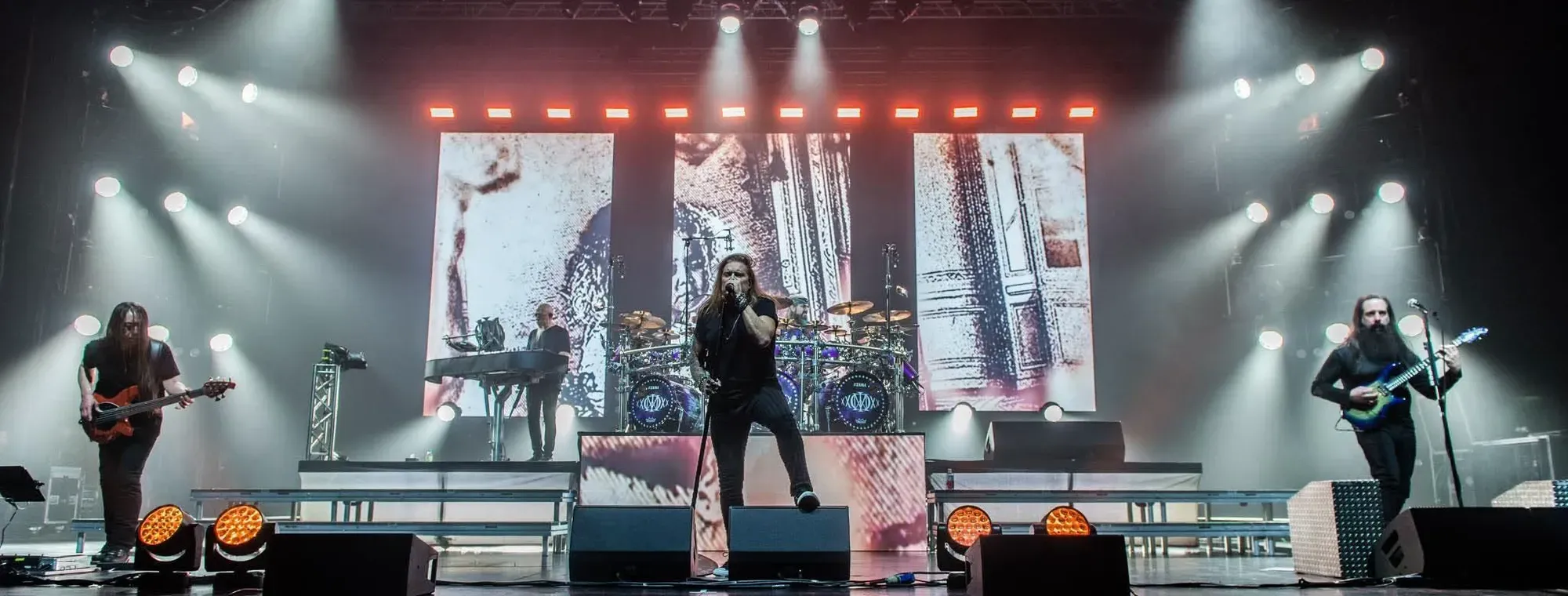
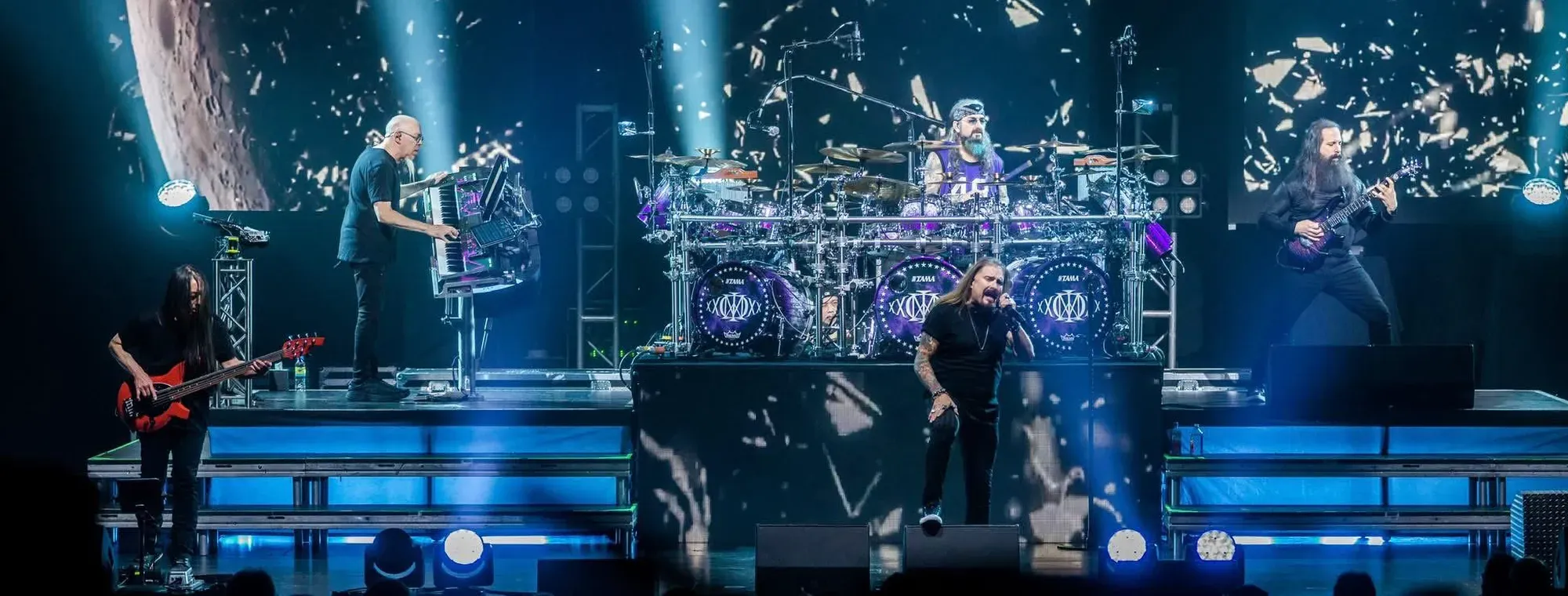
Dream Theater performed on June 26 in Clermont-Ferrand. James LaBrie, the singer of the combo, chose to evoke for Radio Metal the last opus of the group, Systematic Chaos. A controversial 9th album: as usual!
Radio Metal: It wasn’t that long ago that Dream Theater was considered the quintessential progressive metal band with a very clean sound and music. However, you participate more and more in very metal-oriented festivals such as Gigantour or Hellfest. Apparently the Train of Thought album had its effect as you reach more and more metal fans. Do you agree with this analysis?
James LaBrie: There has always been a metal aspect to Dream Theater. If we go back in time, we can find it in the 1994 album Awake, which was already very aggressive. We had very heavy songs like “The Mirror” or “Lie”. We were clearly committed to something very metal with this album. But it’s normal that people refer to Train of Thought more since it’s really the heaviest album we’ve done. The following opuses are more balanced and make the balance between our various influences which are progressive rock, traditional rock and metal. Systematic Chaos, our latest album, is a good example. It is very diverse. It is dynamic and deep. Systematic Chaos is varied but very well built and cohesive. Getting back to Train of Thought, it’s obvious that we can see more and more metalheads in our audience... and that’s really nice. The two worlds come together: progressive fans on the one hand, metal fans on the other. And all come to listen to the same group. This process is difficult but it seems to work!
In fact you keep the best aspects of both worlds...
Sort of!
You played the entire Images and Words album at the Gods of Metal (Editor’s note: June 3, 2007). How does it feel to always play these songs and what was the audience reaction?
It feels good to go back a bit. Realizing that those old songs can still have the effect they originally had on you. It’s always exciting and rewarding to watch the crowd react when announcing that we are going to be playing Images and Words from start to finish. So far it has gone pretty well. We have played the album 4 or 5 times since the start of the tour. It’s funny because we haven’t played it in full since the Images and Words tour!
You had a hard time singing some Images and Words songs because of problems with your voice...
Oh fuck yeah... In December 1994, I was in Cuba with my wife, and with food poisoning I ruptured my vocal cords while vomiting. The specialists I saw told me that the damage was not irreparable but that I would have to wait a very long time to heal. I didn’t really feel like myself as a singer until around 2002-2003. Until then I lived through vocal hell for 8 or 9 years because I didn’t have the same power anymore. But I did my best and today I feel totally healed.
Is that the reason you sing less high on recent albums?
No, it’s just because we want to write this way. I don’t feel like I have to do lalalalaaaa (Editor’s note: James scolds!) to feel good. Unlike many other bands, we try to focus on the melodic aspect of our music rather than the vocal technique. There are always times when I sing high-pitched like when we play the old songs. So yes I still can. But Dream Theater really is all about harmony. It’s a priority in our songs.
Doesn’t it bother you a bit to sing songs like Pull Me Under or Metropolis for the umpteenth time?
Yes, for sure! You have to be honest, when you attack Pull Me Under or Metropolis, I can’t help but say to myself, “again... that’s not true...” (he sings the beginning of Pull Me Under annoyingly). But at the same time we always have to tell ourselves that the public comes to listen to our songs. Whether it’s Pull Me Under, Metropolis or Scarred. We must therefore act like professionals and give everything we have. To do otherwise wouldn’t be fair to the fans. Even if the song doesn’t really excite us anymore, you have to sound pro. But hey, we are human beings. Always repeating the same thing, you get bored. Having said that, the energy released by the audience gives us the strength to play these songs and reminds us of why they worked back then.
Let’s talk a bit about Systematic Chaos. A few months before the album’s release, Mike (Portnoy, drummer for the band) claimed it “has all the elements we’re known for”! It’s pretty vague and it seems to mean that in the end there won’t be a lot of surprises, whereas we are quite used to the contrary with Dream Theater... In the end, that is a very fair description. Is this album just a way to evolve, to surprise us, to respond to those who always expect more from Dream Theater?
Our goal is not to satisfy or surprise people at all costs. We make the albums that we want to do at a specific time. Because that’s who we are, that’s what inspires us. This is where we want to go. We compose from what we feel and our music is totally genuine. It is very important to maintain our integrity. Each of our albums represents who we are at a particular point in our career. They describe us emotionally and professionally. They show what inspires us at that time. The priority is to do what we want first. Then yes... we hope the fans will like it. We have an impressive fanbase around the world. It is incredible to see their loyalty and enthusiasm. They have since realized that change is to be expected. To push our limits. It has become the hallmark of Dream Theater.
During the Six Degrees of Inner Turbulence era in 2002, Mike explained that the title song was included on the album so as not to confuse fans due to the split between the album’s 1st CD and Scenes From a memory (Editor’s note: the band’s previous album, released in 2000). Regarding Systematic Chaos, he added that you have “the most dedicated fans in the world and they would definitely enjoy the new album because there are so many classic elements of Dream Theater”. Are you afraid of disappointing your fans to the point of always including elements specific to Dream Theater without too much innovation?
No, it goes back to what I said previously. Our priority is to do something interesting. Afterwards, we don’t know how this will be interpreted by the listeners. Will they think we did this to hit what they think is real Dream Theater? That we did this to be more complex or technical? On each of our albums, we try to evolve. But we also have to keep the identity of Dream Theater. Keep the elements that identify us immediately on each album. Coming back to Six Degrees, after the concept album Scenes, we wanted to go back to the “songs” format but also to make an epic track in the vein of the previous one. This phenomenon is simply linked to our desire to evolve while keeping our musical identity.
So you don’t pay too much attention to fan requests?
No, that would not be correct of us. “The fans want to hear that, they like this element so let’s reuse it”? No, we can’t operate that way because we would become a kind of jukebox. “Here is what you wanted to hear, maybe (I hope!) you will like it!” This kind of reasoning rings false. In general, the fans understand that we do what we want, what we think we have to do. We compose for ourselves too... We make the music that we love and are proud of. If the public likes it, so much the better. But we can’t force a Dream Theater fan to like the new album just because it’s Dream Theater. On the other hand, we love this album. And that’s what we did it for!
A quick question about the evolution of your style... A French journalist made an interesting point: “In general, bands start by paying homage to their influences and then end up finding their own sound”. It would be the other way around at Dream Theater because we hear your sources of inspiration more distinctly. What do you think of the criticism that you're just compiling influences?
I’m not going to try to convince those who believe that we are just mixing various influences. Personally, I don’t agree. Indeed, the more you work like this, the more you become yourself. Any group that wants to stay contemporary must take into account what is happening in their musical environment. Otherwise, he runs the risk of locking himself in a bubble and having a sound out of step with what is being done today. Indeed, our own influences are more distinct because we take into account the evolution of music. However, no band has rights to any style of music. None can appropriate it. We’re just trying out styles that certain bands have made popular. This or that passage will make you think of Metallica, Slayer or Pantera, certainly. However, we’ve been playing and composing together for years. The chemistry comes more and more naturally and we are able to reinvent the style in our own way. We wouldn’t do songs if we didn’t think they were our own. If we couldn’t make them totally our own. We only put a song on an album if we are proud of it and if it makes us evolve musically...
But in a way we can think that because John Petrucci himself called the group “a musical sponge”.
But don’t you think very talented artists like Coldplay or Lamb Of God work the same way? Lamb Of God has been influenced by Pantera. When I listen to a band that I like, I want to take inspiration from it and make Dream Theater. So yes, we are sponges. We take various elements of what is happening around us in the musical sphere, while being aware that people will make the connection. Of course, our music will sometimes sound like this or that other group, but it remains our music. Each group has its influences and develops its connections, its reconciliations.
In fact what is surprising is this process of evolution... As time goes by, bands try to hide their influences while on your side it's the opposite!
Sure! For the good reason that we are sure of ourselves. Like I said, if a song ends up on the album it’s because we wanted that particular song or style at some point. People will clearly identify which artist this or that song is inspired by, but we don’t intend to hide it. We won’t say, “No no, I’ve never listened to Muse or Coldplay in my life!”
You hit a peak with the live album Score. How do you keep a cool head after recording a live performance with an orchestra?
It was very exciting. It was a great moment in our career and it was a very memorable evening for us. It was a pleasure for us to try our hand at this experience and to play our pieces with an orchestra. One can only feel happy after such a joyful and magical moment. And yes we manage to keep a cool head by telling ourselves that it was the right time in our career to have this experience.
Is this a sense of accomplishment?
Yes, definitely. Performing in this century-old venue called Radio City Music Hall, where great artists like Frank Sinatra, Rush, Yes or The Who have performed... It was incredible to perform in front of 7000 people in a hall with such a history.
Dream Theater has had the habit of going even further year after year. What would be the next challenge?
I’ve no idea. This is something we haven’t even started talking about. We rarely do this before the moment we get into the studio. As usual, we will try to compose an album that opens up new musical horizons for us. While hoping that the fans appreciate this new direction. This is something that we always study very carefully before starting a new album.
Aren’t you tempted to get delirious and think “we did a concert with an orchestra of 20 people, now we’re going to do it with 40 people, then 100 people etc.?”
Sure. If you think that “always more always means better” that’s one way of looking at it. We can also completely rethink the way we present ourselves to the public. Choose to be more intimate and personal or on the contrary return to this grandiose side. We can’t really make up our minds until these situations are on the horizon. Many believe that in order to do better, more must be done. But I don’t think it’s essential. It all depends on how you present it. It is too early to say yet.
Do you not miss small rooms?
Sometimes. Small rooms are more intimate because the fans are right there in front of you. But at the same time we also appreciate the large halls in which we always try to give a personal concert. We always want to interact with the fans, to attract them to us. The more fans there are, the more they can communicate their energy to us. We therefore appreciate both small and large rooms. Each in their own way.
Your last two or three albums have triggered mixed reactions from fans. Some have spoken of a lack of objectivity on your part. You are always ready to try new experiences, why are you reluctant to work with a producer who could bring this objectivity to your music?
Quite simply because we are sufficiently objective ourselves. Our way of creating, producing and mixing an album works perfectly. We don’t feel like we are missing anything. John and Mike are doing very well as producers. They remain members of the group and they always ask our opinion. There is no “don’t tell me what to do, I’m the one producing”. We are still an objective team. This is why it works. I did read some thoughts on the internet. People often wonder why we don’t bring in a producer who could totally transform the sound of an album. But it’s not the producer who is going to make the sound different, it’s us. The album begins and ends with us. Just because a producer tells us, “I don’t really like the direction you’ve taken, we need to change that”, doesn’t mean we’re going to do it. If we don’t agree, we won’t. We do what feels right to us. This is how we will stay true to ourselves. We don’t care if the Pope is in the room and telling us that what we’re doing isn’t spiritual enough. We have already had producers, like Kevin Shirley or Terry Date. They got involved a lot, that’s true, but I’m not sure the changes they made were for the better. In a way, they changed our approach to certain songs, like Take Away My Pain or You Not Me. The demos of those songs were great. If the producer hadn’t stepped in, these songs would have become exactly what we wanted, exactly what they needed to be. A producer does not do everything you know!
Dream Theater is one of the few bands to play almost all of their songs in concert. However, you said that certain songs such as Disappear or Take Away My Pain would no longer be played. Why?
I can see Disappear coming back and I don’t think Disappear is gone! There is only one song that we have never played and whose future is uncertain (Editor’s note: James LaBrie evokes here Space Dye Vest, from the album Awake), even if we must never say never. Every song deserves to be played and replayed. I don’t believe that because a song has been played only once on a special and magical occasion (the one interpretation of Disappear during Live at Budokan) it shouldn’t be played anymore. All of these songs will come back when we feel they have to.
So we can hope to see Space Dye Vest performed in concert?
I do not know. It was the song from Kevin Moore (he sings it in backing vocals by the way).
Have you thought about playing Ayreon songs at concerts with your solo band?
Maybe yes. These are great songs. At the moment, we’re barely finishing writing my next solo album so I haven’t even had time to consider touring yet. But if the tour goes on it would be a real pleasure to play a song or two of Ayreon with this great musician Arjen Lucassen.
Besides, who will you be playing with on the next solo album?
There will be Marco Sfogli on guitar, Matt Guillory on keyboards and Mike Mangini on drums. At the moment the name of the bassist is not set.
So you have completely stopped the Mullmuzzler project?
Yes, because I wanted to evolve towards something else, towards another style of music.
Finally, it’s the James tradition, a little unrelated question: what music are you most ashamed to love listening to?!
Oh my... (he hesitates for a moment) Ah, yes, I remember loving René Simard when I was a kid, you know? It was pop from Quebec. I liked it a lot when I was 7 years old. Now I would have to be paid to listen to this again! Other than that, most of the stuff I was listening to was pretty cool... (searches again)
Britney Spears?
No no no! No chance! Because I never thought it was cool (laughs)! Uh, otherwise, no I don’t see anything else to answer...
You only listen to quality music, actually!
Truth be told, I was raised by my dad using Miles Davis, Nat King Cole... My siblings listened to Pink Floyd and Genesis so I was surrounded by great music!
Original text
Dream Theater : Entretien Avec James LaBrie
mardi, 26 juin 2007 à 0:00 par Radio Metal
Dream Theater s’est produit le 26 juin dernier à Clermont-Ferrand. James LaBrie, le chanteur du combo, a choisi d’évoquer pour Radio Metal le dernier opus du groupe, Systematic Chaos. Un 9ème album controversé : comme d’habitude !
Radio Metal : Il n’y a pas si longtemps, Dream Theater était considéré comme le groupe de Metal progressif par excellence avec un son et une musique très propres. Cependant vous participez de plus en plus à des festivals très orientés Metal comme le Gigantour ou le Hellfest. Apparemment l’album Train of Thought a eu son effet car vous touchez de plus en plus de fans de Metal. Es-tu d’accord avec cette analyse ?
James LaBrie : Il y a toujours eu un aspect Metal chez Dream Theater. Si on remonte dans le temps, on peut trouver en 1994 l’album Awake qui était déjà très agressif. Nous avions des chansons très « rentre dedans » comme « The Mirror » ou « Lie ». Nous nous étions clairement engagés vers quelque chose de très Metal avec cet album. Mais c’est normal que les gens se réfèrent plus à Train of Thought puisque c’est réellement l’album le plus heavy que nous ayons fait. Les opus suivants sont plus équilibrés et font la balance entre nos diverses influences que sont le rock progressif, le rock traditionnel et le Metal. Systematic Chaos, notre dernier album, en est un bon exemple. Il est très diversifié. Cela le rend dynamique et profond. Systematic Chaos est varié mais très bien construit et cohérent. Pour en revenir à Train of Thought, il est évident que l’on peut voir de plus en plus de métalleux dans notre public… et ça fait vraiment plaisir. Les deux mondes se rejoignent : d’un côté les fans de progressif, de l’autre les fans de Metal. Et tous viennent pour écouter le même groupe. Cette démarche est difficile mais ça a l’air de marcher !
En fait vous gardez les meilleurs aspects des deux mondes…
En quelque sorte !
Vous avez joué l’album Images and Words en entier aux Gods of Metal (NDLR : le 3 juin 2007). Quel effet cela fait-il de toujours jouer ces chansons et quelle a été la réaction du public ?
Ça fait du bien de revenir un peu en arrière. De se rendre compte que ces vieilles chansons peuvent encore avoir sur vous l’effet qu’elles avaient à l’origine. C’est toujours excitant et gratifiant de voir la réaction de la foule lorsqu’on annonce qu’on va jouer Images and Words du début à la fin. Pour l’instant ça s’est plutôt bien passé. Nous avons joué l’album 4 ou 5 fois depuis le début de la tournée. C’est drôle car nous ne l’avions pas joué en entier depuis la tournée Images and Words !
Tu as justement eu du mal à chanter certains morceaux d’Images and Words à cause de soucis avec ta voix…
Oh putain, ouais… En décembre 1994, j’étais à Cuba avec ma femme, et à la suite d’une intoxication alimentaire je me suis rompu les cordes vocales en vomissant. Les spécialistes que j’ai consultés m’ont dit que les dommages n’étaient pas irréparables mais qu’il me faudrait attendre très longtemps pour guérir. Je ne me suis vraiment senti moi-même en tant que chanteur qu’autour de 2002-2003. Jusque là j’ai vécu un enfer vocal durant 8 ou 9 ans car je n’avais plus la même puissance. Mais j’ai fait de mon mieux et aujourd’hui je me sens totalement guéri.
Est-ce que c’est la raison pour laquelle tu vas moins dans les aigus sur les albums récents?
Non, c’est tout simplement parce que nous avons envie d’écrire de la sorte. Je ne me sens pas obligé de faire lalalalaaaa (NDLR : James s’égosille !) pour me sentir bien. Contrairement à beaucoup d’autres groupes, nous cherchons à nous focaliser sur l’aspect mélodique de notre musique au lieu de privilégier la technique vocale. Il y a toujours des moments où je chante aigu comme lorsque nous jouons les anciens morceaux. Donc oui j’en suis toujours capable. Mais Dream Theater se focalise vraiment sur l’harmonie. C’est une priorité dans nos chansons.
Est-ce que ça ne t’ennuie pas un peu de chanter pour la énième fois des morceaux comme Pull me Under ou Metropolis ?
Oui, c’est sûr ! Il faut être honnête, quand on attaque Pull me under ou Metropolis je ne peux pas m’empêcher de me dire : « encore… c’est pas vrai… » (il chante le début de Pull me Under d’un air ennuyé). Mais en même temps il faut toujours se dire que le public vient pour écouter nos chansons. Que ce soit Pull me Under, Metropolis ou Scarred. On doit donc se comporter en professionnels et donner tout ce qu’on a. Agir autrement serait injuste envers les fans. Même si le morceau ne nous fait plus vraiment vibrer, il faut avoir l’air pro. Mais bon, nous sommes des êtres humains. A toujours répéter la même chose, on finit par se lasser. Cela dit, l’énergie dégagée par le public nous donne la force de jouer ces morceaux et nous rappelle pourquoi elles avaient marché à l’époque.
Parlons un peu de Systematic Chaos. Quelques mois avant la sortie de l’album, Mike (Portnoy, batteur du groupe) a affirmé qu’il « contenait tous les éléments pour lesquels nous sommes connus » ! C’est assez vague et ça semble vouloir dire que finalement il n’y aura pas beaucoup de surprises, alors qu’on est justement habitué au contraire avec Dream Theater… Au final, c’est une description très juste. Est-ce que cet album est justement une manière d’évoluer, de nous surprendre, de répondre à ceux qui attendent toujours plus de Dream Theater ?
Notre objectif n’est pas de satisfaire ou de surprendre les gens à toute force. Nous faisons les albums que nous voulons faire à un moment précis. Parce que c’est ce que nous sommes, c’est ce qui nous inspire. C’est là où nous voulons aller. Nous composons à partir de ce que nous ressentons et notre musique est totalement sincère. Il est très important de conserver notre intégrité. Chacun de nos albums représente ce que nous sommes à tel ou tel moment précis de notre carrière. Ils nous décrivent émotionnellement et professionnellement. Ils montrent ce qui nous inspire à ce moment-là. La priorité est de faire d’abord ce que nous voulons. Ensuite oui…on espère que les fans vont apprécier. Nous avons une fanbase impressionnante dans le monde. C’est incroyable de constater leur fidélité et leur enthousiasme. Depuis le temps, ils ont compris qu’il fallait s’attendre à des changements. A ce qu’on repousse nos limites. C’est devenu la marque de fabrique de Dream Theater.
A l’époque de Six Degrees of inner turbulence) en 2002, Mike a expliqué que la chanson titre a été inclue dans l’album pour ne pas désorienter les fans du fait de la rupture entre le 1er CD de l’album et Scenes From a memory (NDLR : l’album précédent du groupe, sorti en 2000). Concernant Systematic Chaos, il avait ajouté que vous aviez « les fans les plus dévoués au monde et qu’ils apprécieraient certainement le nouvel album parce qu’il y a énormément d’éléments classiques de Dream Theater ». Avez-vous peur de décevoir vos fans au point de toujours inclure des éléments spécifiques à Dream Theater sans trop d’innovations ?
Non, ça rejoint ce que je disais précédemment. Notre priorité est de faire quelque chose d’intéressant. Après, on ne sait pas comment cela va être interprété par les auditeurs. Vont-ils penser que nous avons fait ceci pour toucher ce qu’ils pensent être du vrai Dream Theater ? Que nous avons fait cela pour être plus complexes ou techniques ? Dans chacun de nos albums, nous cherchons à évoluer. Mais il nous faut aussi conserver l’identité de Dream Theater. Conserver ses éléments qui nous identifient immédiatement sur chaque album. Pour en revenir à Six Degrees, après le concept album Scenes, nous voulions revenir au format « chansons » mais aussi faire un morceau épique dans la veine du précédent. Ce phénomène est simplement lié à notre volonté d’évoluer tout en gardant notre identité musicale.
Donc vous ne prêtez pas trop attention aux demandes des fans?
Non, ce ne serait pas correct de notre part. Les fans ont envie d’entendre ça, ils aiment bien cet élément alors réutilisons-le ? Non on ne peut pas fonctionner de la sorte car nous deviendrions une sorte de juke-box. « Tenez, voici ce que vous vouliez entendre, peut-être (j’espère !) que vous allez aimer ! ». Ce genre de raisonnement sonne faux. En général, les fans comprennent que nous faisons ce que nous voulons, ce que nous pensons devoir faire. Nous composons pour nous également…nous faisons la musique que nous aimons et dont nous sommes fiers. Si le public aime, tant mieux. Mais nous ne pouvons pas forcer un fan de Dream Theater à aimer le nouvel album juste parce que c’est Dream Theater. D’un autre côté, nous, on l’aime cet album. Et c’est pour ça que nous l’avons fait !
Une petite question sur l’évolution de votre style… Un journaliste français a fait une remarque intéressante: « en général, les groupes commencent par rendre hommage à leurs influences puis finissent par trouver leur propre son ». Ce serait l’inverse chez Dream Theater car on entend de façon plus distincte vos sources d’inspiration. Que pensez-vous de la critique selon laquelle vous ne faites que compiler les influences ?
Je ne vais pas essayer de convaincre ceux qui croient que nous ne faisons que mixer diverses influences. Personnellement je ne suis pas d’accord. En effet, plus on travaille ainsi et plus on devient soi même. Tout groupe qui veut rester contemporain doit prendre en compte ce qui se passe dans son environnement musical. Sinon, il court le risque de s’enfermer dans une bulle et d’avoir un son en décalage par rapport à ce qui se fait aujourd’hui. Effectivement, nos propres influences sont plus distinctes car nous prenons en compte l’évolution de la musique. Cela dit, aucun groupe n’a de droits sur un style de musique. Aucun ne peut se l’approprier. Nous ne faisons que nous essayer à des styles que certains groupes ont rendus populaires. Tel ou tel passage fera penser à Metallica, Slayer ou Pantera, assurément. Cependant, voilà des années que nous jouons et composons ensemble. L’alchimie se fait de plus en plus naturellement et nous arrivons à réinventer le style à notre sauce. Nous ne ferions pas de chansons si nous ne pensions pas que ce sont les nôtres. Si nous ne pouvions pas nous les approprier totalement. Nous mettons une chanson sur un album que si nous en sommes fiers et si cela nous fait évoluer musicalement…
Mais d’une certaine manière on peut penser cela parce que John Petrucci lui-même a qualifié le groupe « d’éponge musicale »
Mais ne penses-tu pas que des artistes très talentueux comme Coldplay ou Lamb Of God fonctionnent de la même manière ? Lamb Of God a bien été influencé par Pantera. Lorsque j’écoute un groupe qui me plait, j’ai envie de m’en inspirer pour en faire du Dream Theater. Donc oui, nous sommes des éponges. Nous prenons divers éléments de ce qui se passe autour de nous dans la sphère musicale. Tout en étant conscients que les gens vont faire le rapprochement. Certes, notre musique va parfois sonner comme tel ou tel autre groupe mais cela reste notre musique. Chaque groupe a ses influences et développe ses connexions, ses rapprochements.
En fait ce qui est surprenant, c’est ce processus d’évolution… Au fur et à mesure, les groupes essaient de cacher leurs influences alors que de votre côté c’est le contraire !
Bien sûr ! Pour la bonne raison que nous sommes sûrs de nous. Comme je le disais, si une chanson finit sur l’album c’est parce que nous avions envie de cette chanson ou de ce style précis à un instant donné. Les gens vont clairement identifier de quel artiste telle ou telle chanson s’inspire mais on ne compte pas s’en cacher. On ne dira pas : « non non, je n’ai jamais écouté Muse ou Coldplay de ma vie ! »
Vous avez atteint un pic avec l’album live Score. Comment garder la tête froide après avoir enregistré un live avec un orchestre ?
C’était très excitant. C’était un grand moment de notre carrière et cette soirée a été mémorable pour nous. Cela nous a fait plaisir de nous essayer à cette expérience et de jouer nos morceaux avec un orchestre. On ne peut que se sentir heureux après un moment aussi réjouissant et magique. Et oui on parvient à garder la tête froide en se disant que c’était le bon moment dans notre carrière pour faire cette expérience.
Est-ce qu’il s’agit d’un sentiment d’accomplissement ?
Oui, assurément. Jouer dans cette salle centenaire qu’est le Radio City Music Hall, là où se sont produits de grands artistes comme Frank Sinatra, Rush, Yes ou The Who… C’était incroyable de jouer devant 7000 personnes dans une salle avec une telle histoire.
Dream Theater a eu l’habitude d’aller encore plus loin d’années en années. Quel serait le prochain challenge ?
Je n’en ai aucune idée. C’est quelque chose dont on n’a même pas commencé à parler. On le fait rarement avant le moment où l’on rentre en studio. Comme d’habitude, on s’efforcera de composer un album qui nous ouvre d’autres horizons musicaux. Tout en espérant que les fans apprécient cette nouvelle direction. C’est quelque chose que l’on étudie toujours avec beaucoup d’attention avant de commencer un nouvel album.
Est-ce qu’on n’est pas tenté de rentrer dans un délire du type « on a fait un concert avec un orchestre de 20 personnes, maintenant on va le faire avec 40 personnes, puis 100 personnes etc. »?
Bien sûr. Si on pense que « toujours plus signifie toujours mieux » c’est une façon de voir les choses. Nous pouvons aussi repenser intégralement notre façon de nous présenter au public. Choisir d’être plus intimistes et personnels ou au contraire revenir à ce côté grandiose. On ne peut pas vraiment se décider avant que ces situations ne se profilent à l’horizon. Beaucoup pensent que pour faire mieux, il faut faire plus. Mais je ne pense pas que ce soit indispensable. Tout dépend de la façon de le présenter. Il est pour l’instant trop tôt pour nous prononcer.
Les petites salles ne vous manquent pas ?
Si, parfois. Les petites salles sont plus intimes car les fans sont juste là, en face de toi. Mais en même temps on apprécie également les grandes salles dans lesquelles on essaie toujours de donner un concert personnel. On a toujours envie d’interagir avec les fans, de les attirer à nous. Plus les fans sont nombreux, plus ils peuvent nous communiquer leur énergie. On apprécie donc aussi bien les petites que les grandes salles. Chacune à leur manière.
Vos deux ou trois derniers albums ont déclenché des réactions mitigées chez les fans. Certains ont parlé d’un manque d’objectivité de votre part. Vous qui êtes toujours prêts à tenter de nouvelles expériences, pourquoi êtes-vous réticents à l’idée de travailler avec un producteur qui pourrait apporter cette objectivité à votre musique ?
Tout simplement parce que nous sommes suffisamment objectifs nous-mêmes. Notre façon de créer, produire et mixer un album fonctionne parfaitement. Nous n’avons pas l’impression qu’il nous manque quelque chose. John et Michael s’en sortent très bien en tant que producteurs. Ils restent des membres du groupe et ils nous demandent toujours notre avis. Il n’y a pas de « ne me dites pas ce que j’ai à faire, c’est moi qui produis ». Nous sommes toujours une équipe objective. C’est pour cette raison que cela fonctionne. J’ai effectivement lu quelques réflexions sur Internet. Les gens se demandent souvent pourquoi nous ne faisons pas appel à un producteur qui pourrait transformer totalement le son d’un album. Mais ce n’est pas le producteur qui va rendre le son différent, c’est nous. L’album commence et se termine avec nous. Ce n’est pas parce qu’un producteur nous dit « je n’aime pas trop la direction que vous avez prise, il faudrait changer ça », qu’on va le faire. Si nous ne sommes pas d’accord, nous ne le ferons pas. Nous faisons ce qui nous paraît bien. Il n’y a que comme ça que nous resterons fidèles à nous-mêmes. On se fiche pas mal que le Pape soit dans la pièce et nous dise que ce qu’on fait n’est pas assez spirituel. Nous avons déjà eu des producteurs, comme Kevin Shirley ou Terry Date. Ils se sont beaucoup impliqués, c’est vrai, mais je ne suis pas sûr que les changements qu’ils ont apportés aient été pour le mieux. D’une certaine façon, ils ont modifié notre approche de certaines chansons, comme Take Away My Pain ou You Not Me. Les démos de ces chansons étaient formidables. Si le producteur n’était pas intervenu, ces chansons seraient devenues exactement ce que nous voulions, exactement ce qu’elles devaient être. Un producteur ne fait pas tout vous savez !
Dream Theater est un des rares groupes à jouer presque toutes ses chansons en concert. Pourtant, vous avez affirmé que certains morceaux tels que Disappear ou Take Away My Pain ne seraient plus joués. Pourquoi ?
Je vois bien Disappear revenir et je ne pense pas que Disappear aie disparu ! Il n’y a qu’une seule chanson que nous n’ayons jamais jouée et dont l’avenir est incertain (NDLR : James LaBrie évoque ici Space Dye Vest, de l’album Awake), même s’il ne faut jamais dire jamais. Chaque chanson mérite d’être jouée et rejouée. Je ne crois pas que parce qu’une chanson a été jouée une unique fois lors d’une occasion particulière et magique (cf. l’unique interprétation de Disappear lors du Live at Budokan) il ne faut plus la jouer. Toutes ces chansons reviendront lorsque nous estimerons qu’elles devront le faire.
On peut donc espérer voire Space Dye Vest jouée en concert ?
Je ne sais pas. C’était LA chanson de Kevin Moore (il chante d’ailleurs dessus en backing vocals).
As-tu pensé à jouer des titres d’ Ayreon lors de concerts avec ton groupe solo ?
Peut-être, oui. Ce sont d’excellents morceaux. En ce moment, on termine à peine l’écriture de mon prochain album solo donc je n’ai même pas eu le temps d’envisager la tournée pour l’instant. Mais si la tournée se fait ce serait un vrai plaisir de jouer un ou deux morceaux d’Ayreon avec ce grand musicien qu’est Arjen Lucassen.
D’ailleurs, avec qui joueras-tu dans le prochain album solo ?
Il y aura Marco Sfogli à la guitare, Matt Guillory aux claviers et Mike Mangini à la batterie. Pour l’instant le nom du bassiste n’est pas fixé.
Tu as donc totalement arrêté le projet Mullmuzzler ?
Oui, parce que je voulais évoluer vers autre chose, vers un autre style de musique.
Pour finir, c’est la tradition James, une petite question qui n’a rien à voir : quelle est la musique que tu as le plus honte d’aimer écouter ?!
Oh la la… (il hésite un moment) Ah, oui, je me souviens d’avoir bien aimé René Simard quand j’étais gosse, vous connaissez ? C’était de la pop du Québec. Ca m’avait beaucoup plu quand j’avais 7 ans. Maintenant il faudrait me payer pour que je réécoute ça ! En dehors de ça, la plupart des trucs que j’écoutais étaient plutôt cool… (il cherche à nouveau)
Britney Spears ?
Non non non ! Aucune chance ! Parce que justement je n’ai jamais trouvé ça cool (rires) ! Euh, sinon, non je ne vois rien d’autre pour répondre…
Tu n’écoutes que de la musique de qualité en fait !
A vrai dire, j’ai été élevé par mon père à coups de Miles Davis, Nat King Cole… Mes frères et s?urs écoutaient Pink Floyd et Genesis donc j’étais entouré de bonne musique !