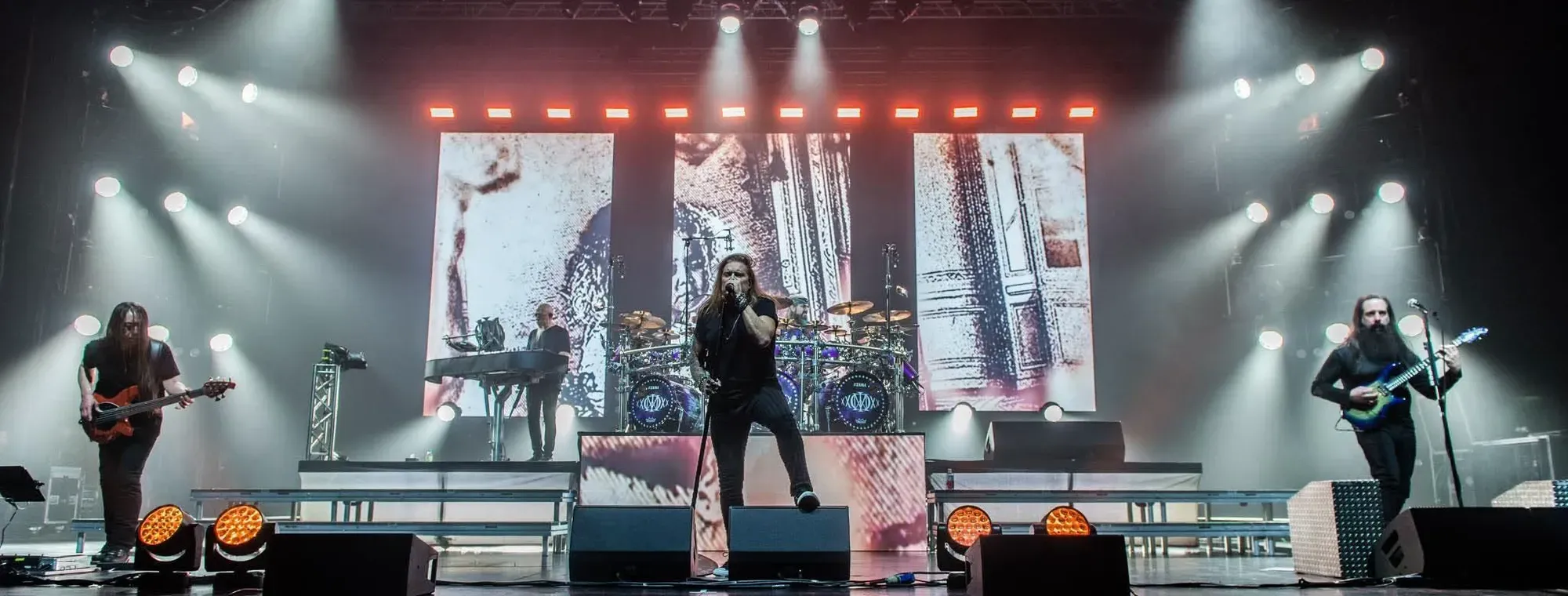

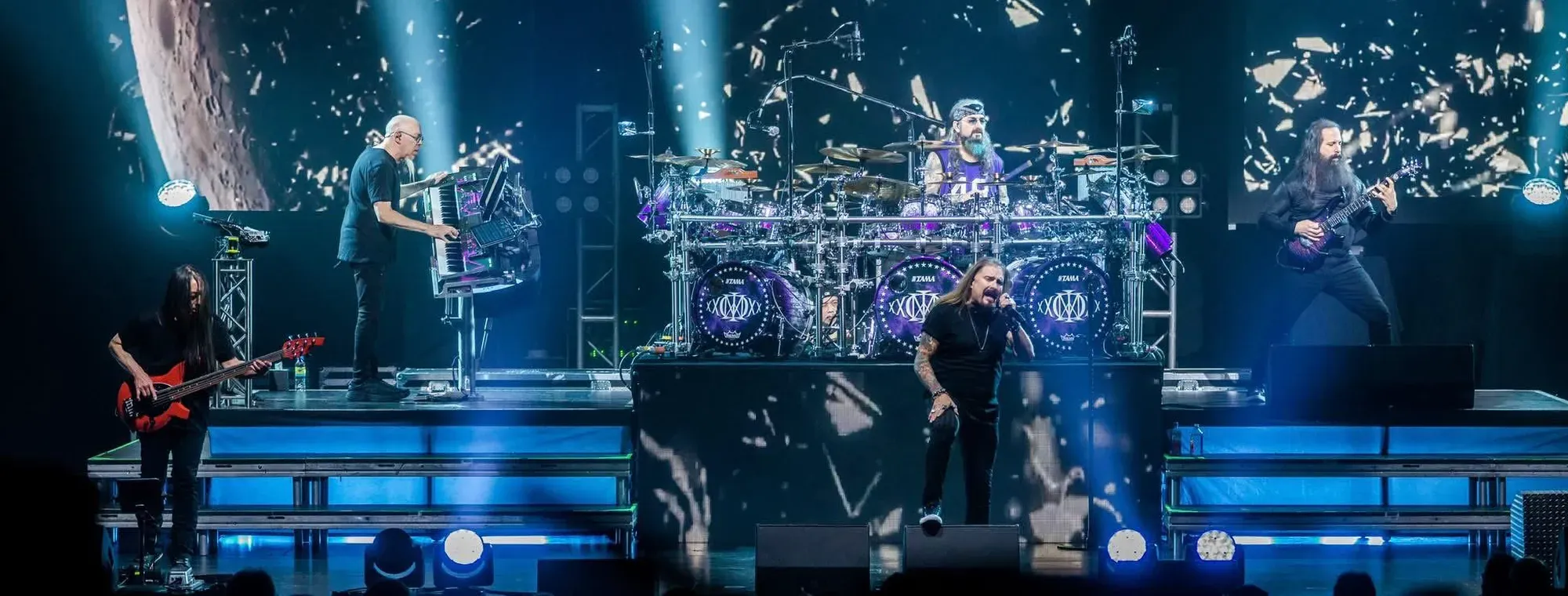
Originally published in Post-Gazette.com · October 2011
New drummer, album help Dream Theater move on
By Scott Mervis
InterviewJohn Petrucci3 min read
Oct 3, 2011
For Dream Theater, the dramatic turn of events leading up to the album titled “A Dramatic Turn of Events” was the departure of drummer Mike Portnoy, who had been with the progressive metal band since day one in 1985.
The drummer had done a short side stint with Avenged Sevenfold in 2010 and then decided he was burned out and wanted to take a few years off. Dream Theater chose not to wait and moved on, picking up veteran drummer Mike Mangini (Extreme, Steve Vai) for the new album and tour, which closes the Trib Amphitheatre season on Tuesday.
“It definitely had a great impact on us,” guitarist/lyricist John Petrucci says of the departure of Mr. Portnoy. “It was something that we didn’t expect, and it was a major blow to the band, a major heartbreak to have a friend and member of the band for 25 years decide to leave. It was not easy, but we were able to gather ourselves and accept that reality and move forward.”
Dream Theater moved forward with “A Dramatic Turn of Events,” an 11th studio album that follows in the band’s tradition of majestic prog songs filled with rapid time signature changes and fiery and highly technical ensemble playing.
“We had a lot of conversations going into it about the kind of album we wanted to make,” Mr. Petrucci says. “We wanted to make sure that we really focused in on the elements that make up our sound. I said to [keyboardist] Jordan [Rudess], ‘If we’re going to go in an epic direction with the songs, let’s make sure that we really think that out and explore the possibilities.’ The songwriting, the chord structures, the vocal range, the melodic structure, we wanted it to be strong in that sense. As a producer I wanted to have something that was hi-fi and polished but had more of a balance that make up our music – the metal element, the prog element, the melodic element.”
While it would seem like the playing is the thing, the guitarist says the lyrics – almost biblical in their dramatic scale – are just as important to these Berklee-trained musicians.
“I’ve been the lyricist for a long time now, since I was a teenager, and was always into lyrics of bands like Pink Floyd and Rush,” he says. “It’s the message that you’re putting out there and really is the connection between the vocalist and his role in the music. It’s really important.”
One of the things that defines Dream Theater is the tight relationship between the band and its avid fanbase, which supports a group that isn’t particularly fashionable and flies under the mainstream radar.
“We realize that in order for us to play this kind of music for as long as we have, to have the worldwide success we have – without the pop exposure or mainstream media exposure – it’s due to the closeness we have to the fans and the fact that people who like this kind of music aren’t passive fans. It’s not background music. It’s the kind of music that takes some attention, and those type of people are active listeners. We try to engage them as much as we can and take advantage of all the outlets that are out there.”
A good example was a documentary the band made detailing the audition process for the new drummer.
“It was a great way to include our listeners and show them what we were going through. It helped introduce people to Mike and made that process all the smoother.”
For every fan, there are plenty of detractors, those who write off Dream Theater as being too “showy,” of basically flashing “too many notes.”
“It’s just opinions,” Mr. Petrucci says. “This is the kind of music that we love to write and love to play. To us, there aren’t too many notes,” he says with a laugh. “It sounds exactly the way we intend it. There are a lot of people who appreciate that. People who don’t like it, it’s just opinions. There’s millions of them out there. That’s why there are all different types of music. It doesn’t affect me either way. The important thing is that you write the music you want to write and enjoy writing and that’s a part of you.”